
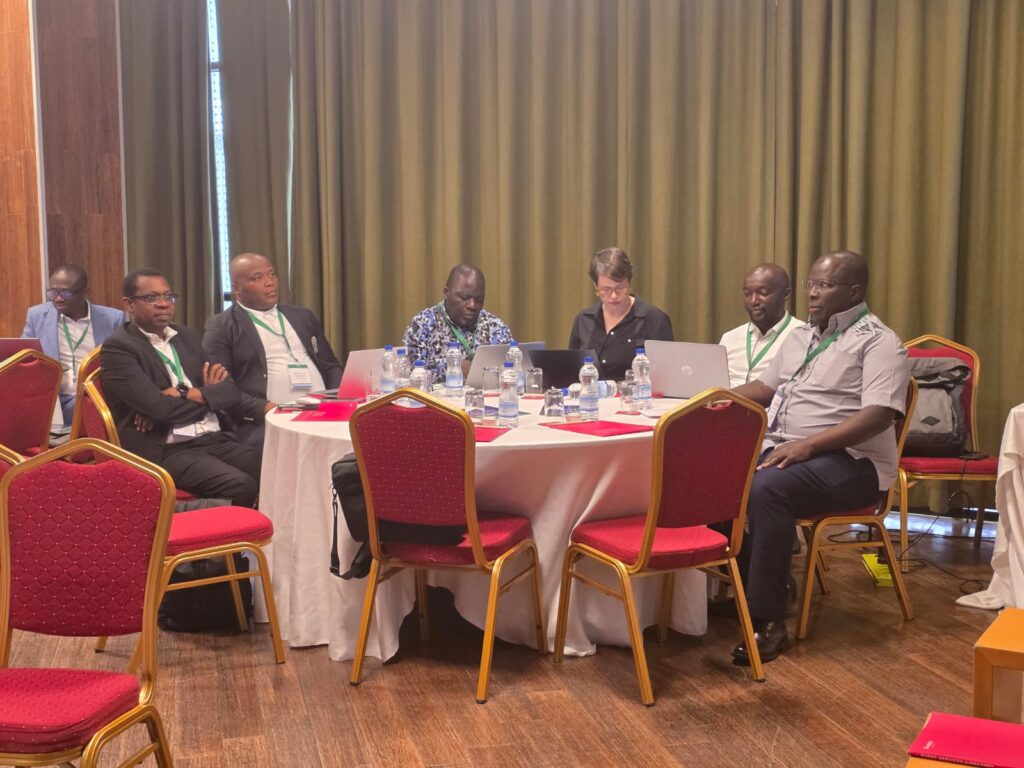
Ethiopian Landscape & Institutional Welcome at AASTU
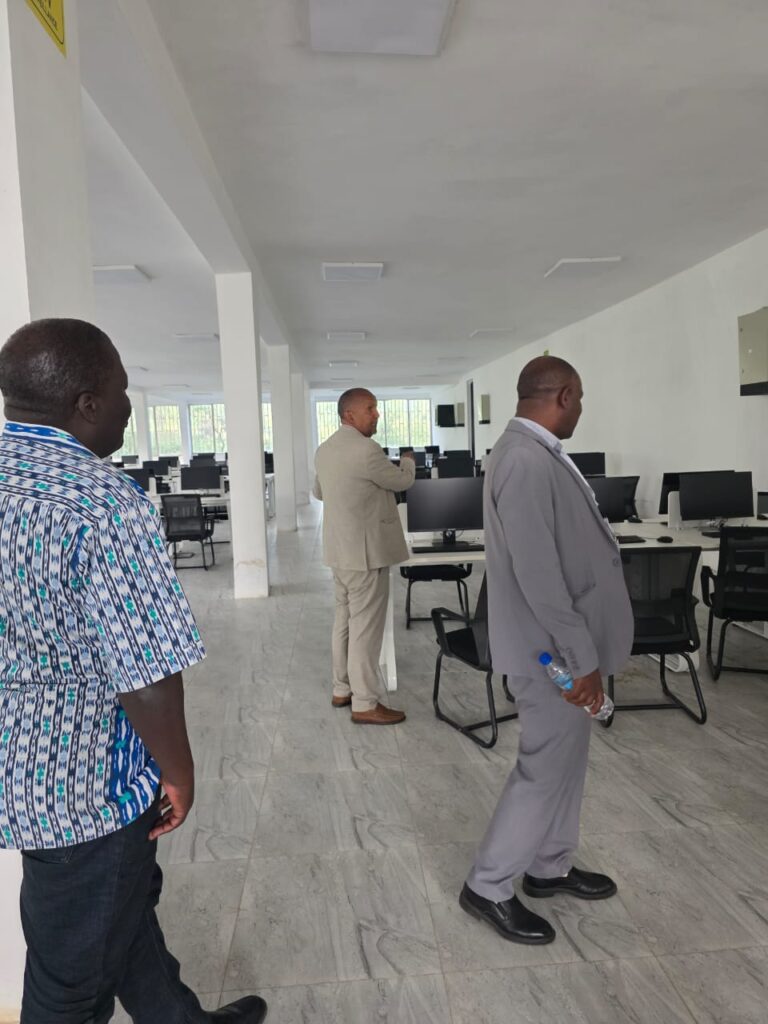
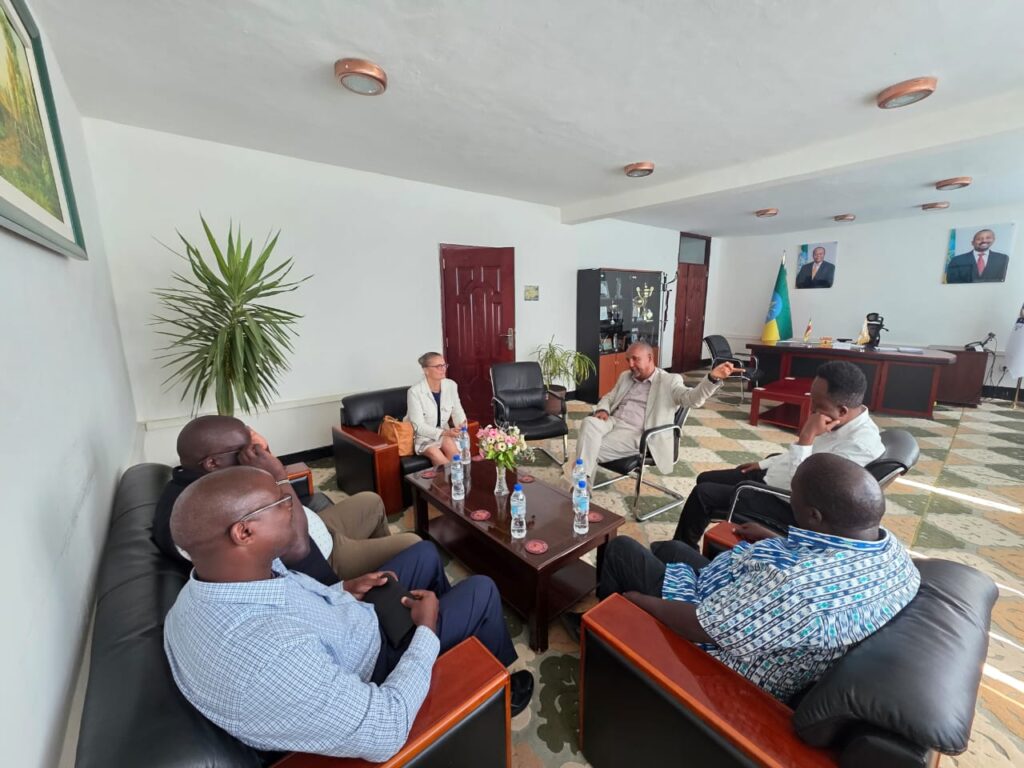
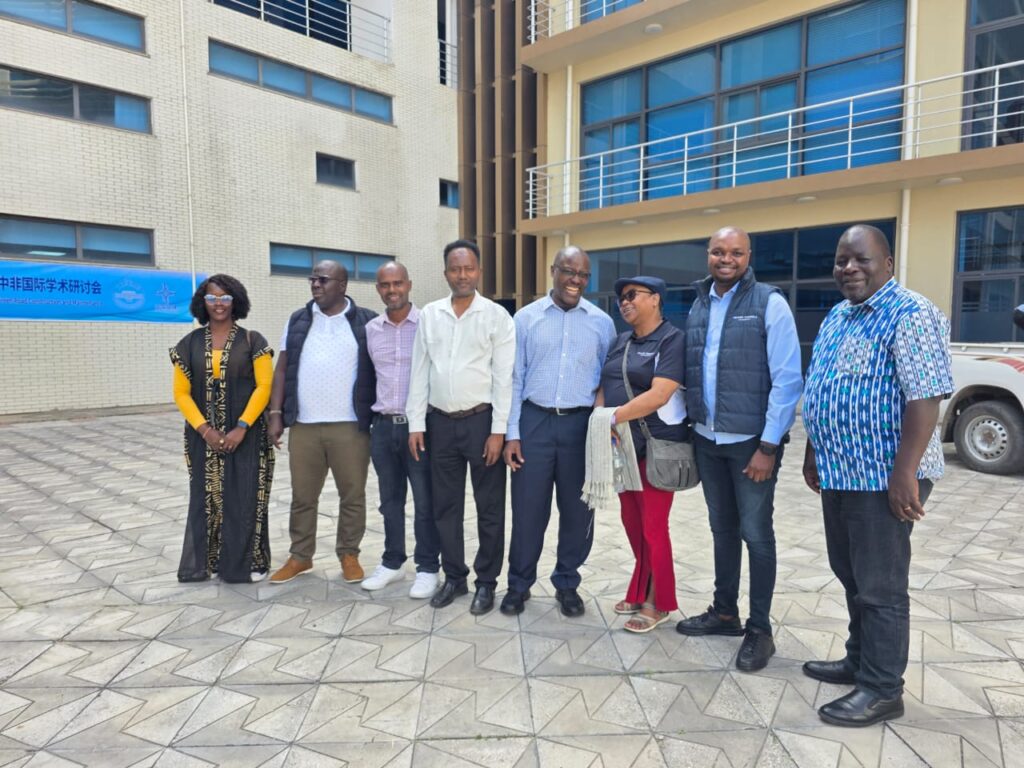
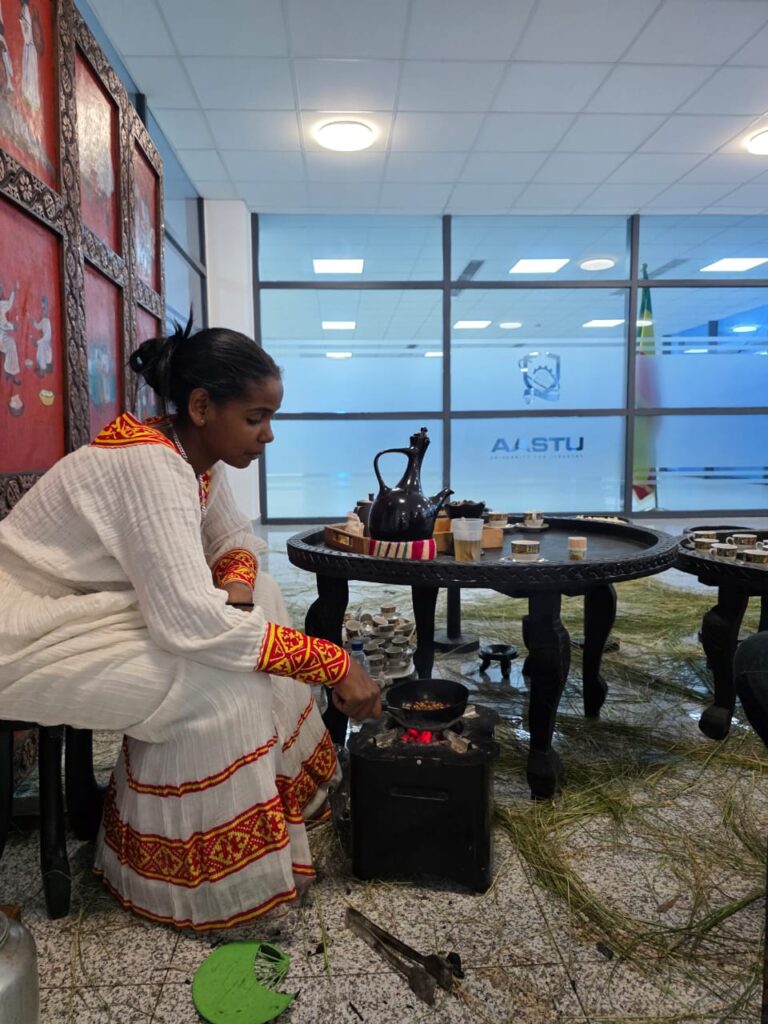
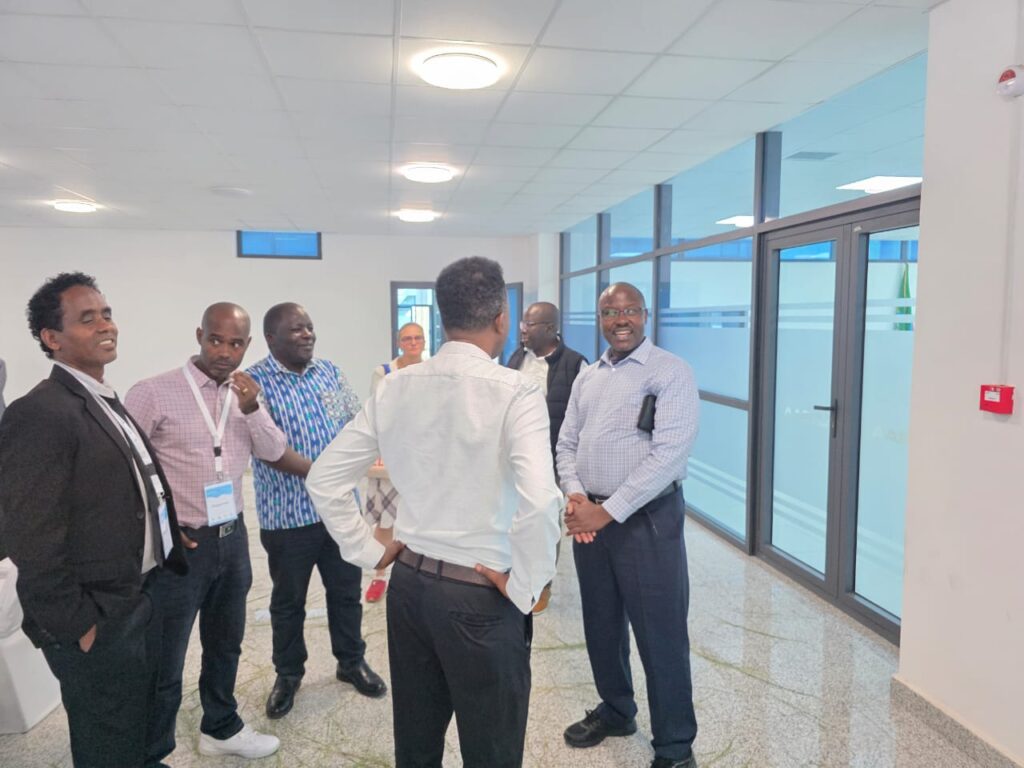
Delegates had the opportunity to explore the Ethiopian higher education landscape with a visit to AASTU, witnessing firsthand how the host university is advancing scientific research, technological innovation, and international collaboration. During the welcome address, AASTU President Dr. Asrat Atsedeweyn warmly welcomed participants to Ethiopia and highlighted the University’s deep commitment to internationalization through strategic partnerships, joint research, academic cooperation, and knowledge exchange. He emphasized the importance of sustainable institutional collaboration in addressing shared challenges and promoting innovation in African higher education.
Building Resilient Knowledge Ecosystems & African Agency
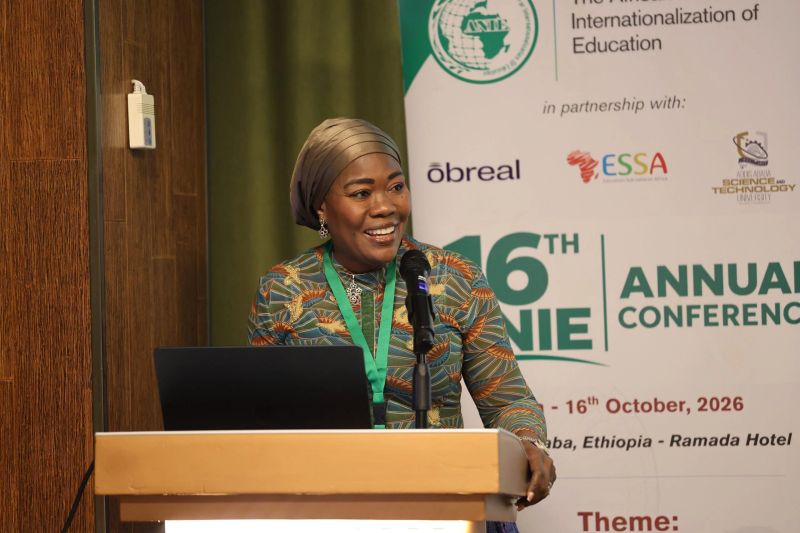
Opening the conference’s keynotes, Prof. Goski Alabi (Chairperson, ANIE Board) urged participants to look beyond mere institutional survival and resource constraints. True resilience requires African institutions to shift from passive participants to active leaders and shapers of global knowledge systems. She noted that while mobility agreements and research projects are valuable, numbers alone do not equal strength. African universities must ask critical questions: Are partnerships enabling local institutions to originate research questions? Do capabilities remain after project funding ends? Are students and researchers gaining equitable opportunities? Ultimately, the goal is not to disengage from the world, but to engage confidently and equitably—moving from participation to leadership, and from fragmented activities to sustained, African-led knowledge ecosystems.
Crafting Partnerships That Endure
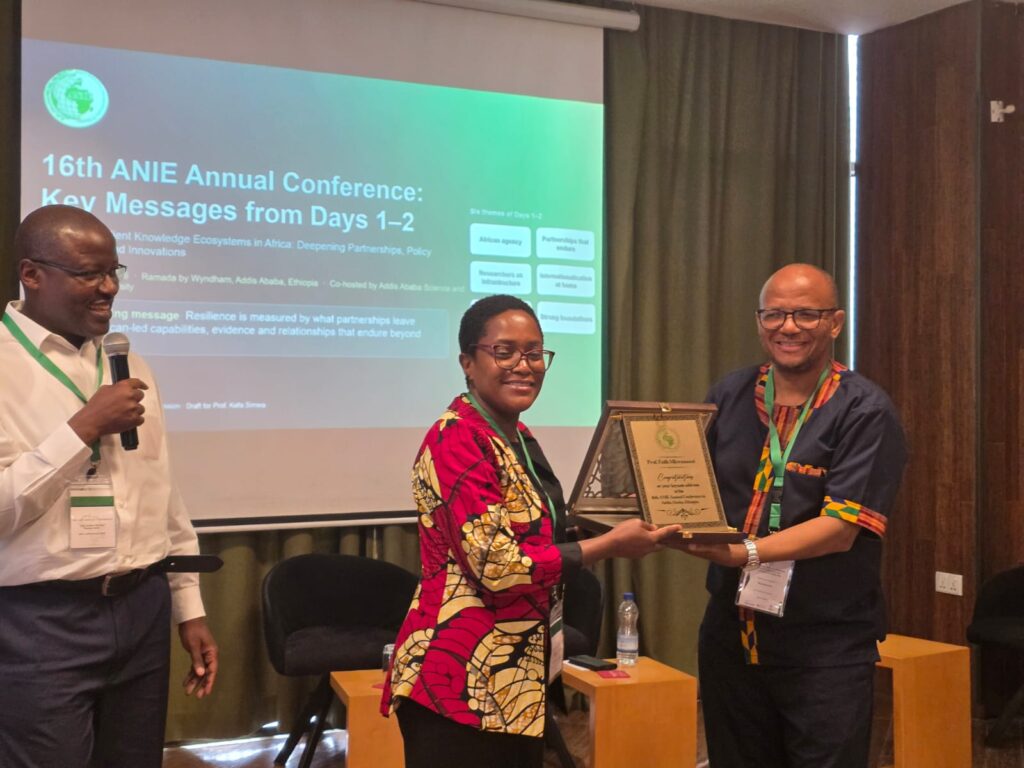
In her keynote address on sustainable collaboration, Prof. Faith Mkwananzi (University of the Free State) invited participants to critically inspect international and regional collaborations by looking closely at the core mechanics of equity and sustainability. She framed partnerships around essential evaluative questions:
- Who sets the table and defines the agenda?
- Who participates, and what becomes possible?
- Who benefits, and who is recognized?
- What remains once project funding ends?
Emphasizing community-engaged networks (such as RAHEdA) and grassroots learning hubs, she highlighted that enduring partnerships must foster genuine reciprocity, mutual benefit, and lasting social transformation rather than superficial compliance.
Rebuilding Educational Foundations from the Ground Up
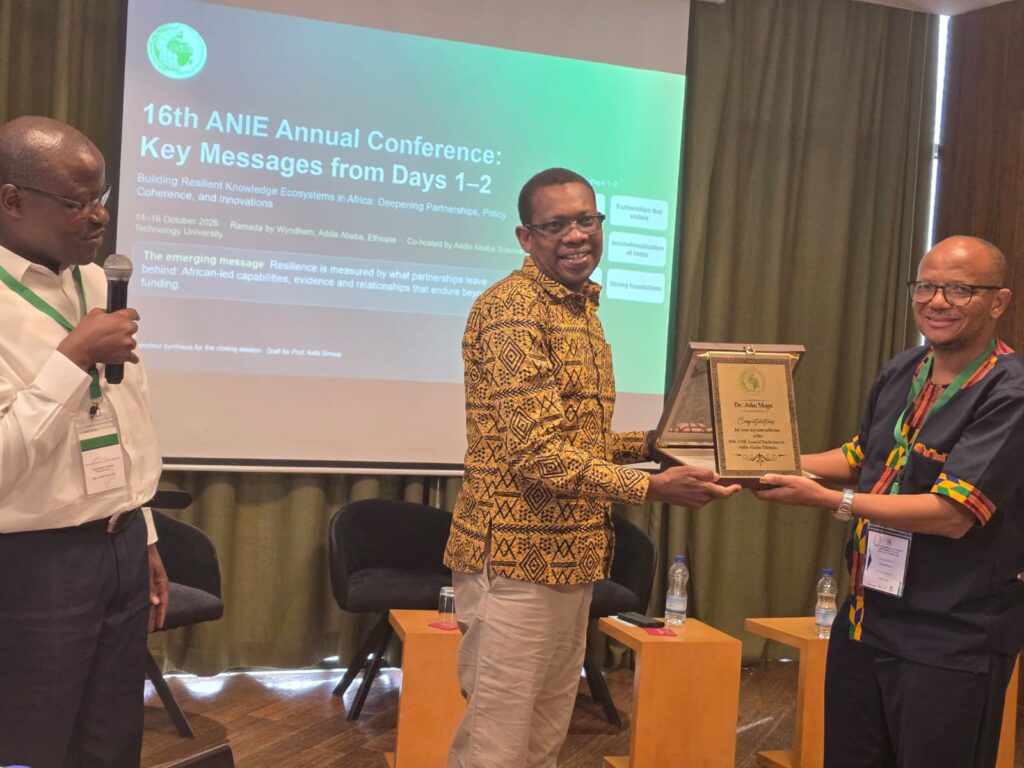
Addressing foundational learning, Dr. John Mugo (Executive Director of Mizizi Elimu Afrika & Co-Director of HERI Africa) stressed that building robust knowledge ecosystems starts at the very beginning of the learning continuum. Stark data reveals that 86% of children in sub-Saharan Africa cannot read and understand a simple text by age 10, highlighting an urgent need to tackle foundational literacy and numeracy. Currently, Africa accounts for only 3% of global education research, with over 90% of it un-funded or reliant on external frameworks. Through initiatives like HERI Africa and the National Education Research Agenda (co-owned with governments and anchored in institutions like the University of Embu, Kenyatta University, and Kisii University), the continent is working to scale local research contributions up to 30% by 2050.
Advancing Research Capacity, Networks, and Strategic Milestones
Over the three days, robust presentations on the conference theme brought together participants from diverse sectors. The conference spotlighted major continental milestones and capacity-building programs:
- DigiGrad Project: Co-implemented by ANIE, OBREAL Global, and institutional partners from Africa and Europe to internationalize and digitalize graduate training. The project has focused on the development of institutional strategies, the creation of the 1st African Handbook for Internationalisation Practitioners, training 120 postgraduate supervisors and 120 postgraduates, and launching the Network of Early Career Researchers on Digitalisation and Internationalisation (NECREDI).
- NECREDI (Network of Early Career Researchers): Marking its one-year milestone, NECREDI serves as an active community of practice under ANIE, supporting young researchers (under 40) across partner universities in Kenya, South Sudan, Burundi, and Ghana through targeted capacity building, digital tools, and mentorship. Early-career researchers, postgraduate students, and faculty members are warmly invited to join the network and sign up here or get in touch via the contact page.
- NIOPA & Regional Knowledge Networks: Emphasized scaling regional frameworks, peer learning, and visibility tools to ensure African research is “Found, Understood, and Used”.
Strategic Agreements & Future Collaborations: Highlighted the official signing of a Framework Agreement between the University of Johannesburg’s Ali Mazrui Centre and ANIE, alongside upcoming multi-lateral partnerships like AfriExchange (Erasmus+, 2027–2029) to expand Virtual Exchange and COIL across Sub-Saharan Africa and Europe.
Special Addition: Inspiring Young Voices
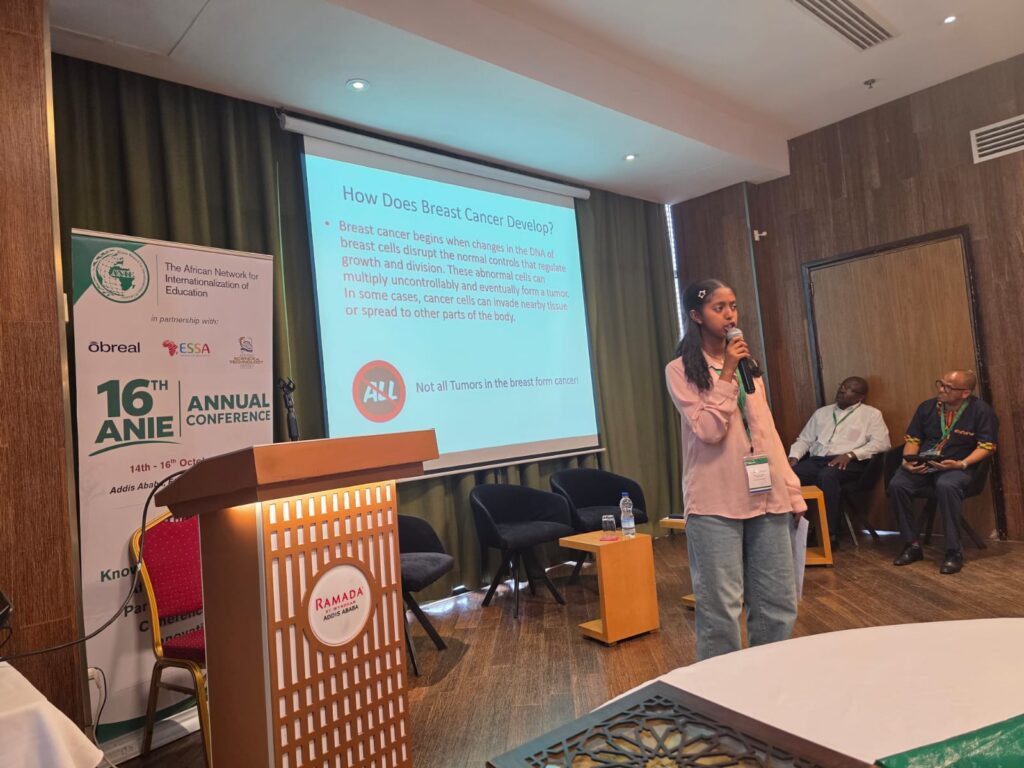
In addition to the core sessions, the conference was graced by Rebecca Tadesse, a Grade 10 student from Yetwlid Tesfa School in Addis Ababa, Ethiopia. Reflecting on October as Breast Cancer Awareness Month, she led a powerful presentation focused on breast cancer awareness creation. She challenged participants with her insights, demonstrating ANIE’s deep commitment to uplifting young student voices and providing students with a vital platform to internationalize knowledge.
Conference Conclusion: The Core Takeaway
As we look toward the future of higher education on our continent, the core message of the 16th ANIE Annual Conference stands clear: African knowledge ecosystems become truly resilient when Africa sets the table and acts without waiting. Let us continue to build partnerships measured not by the volume of MoUs signed, but by the enduring capabilities, evidence, and relationships we leave behind.
Access Conference Resources & Share Your Feedback
To keep the momentum of Addis Ababa alive in our everyday work, the ANIE Secretariat has compiled key follow-up resources for our community:
- 📸 Conference Photo Gallery: Browse and download group highlights and session moments: View Photos
- 📊 Presentation Slides: Access files shared across conference sessions: Access Presentations
- 📝 Conference Feedback Survey: Help us shape and improve future ANIE initiatives by sharing your thoughts: Take the Survey
As we return to our respective institutions, let us continue to ask the hard questions, build fair partnerships, and act without waiting. Together, we are building resilient knowledge ecosystems across Africa.