
African universities call for partnerships to be judged by what they leave behind
The 16th ANIE Annual Conference closes with a call for Africa to set its own knowledge agenda and to act without waiting for external funding
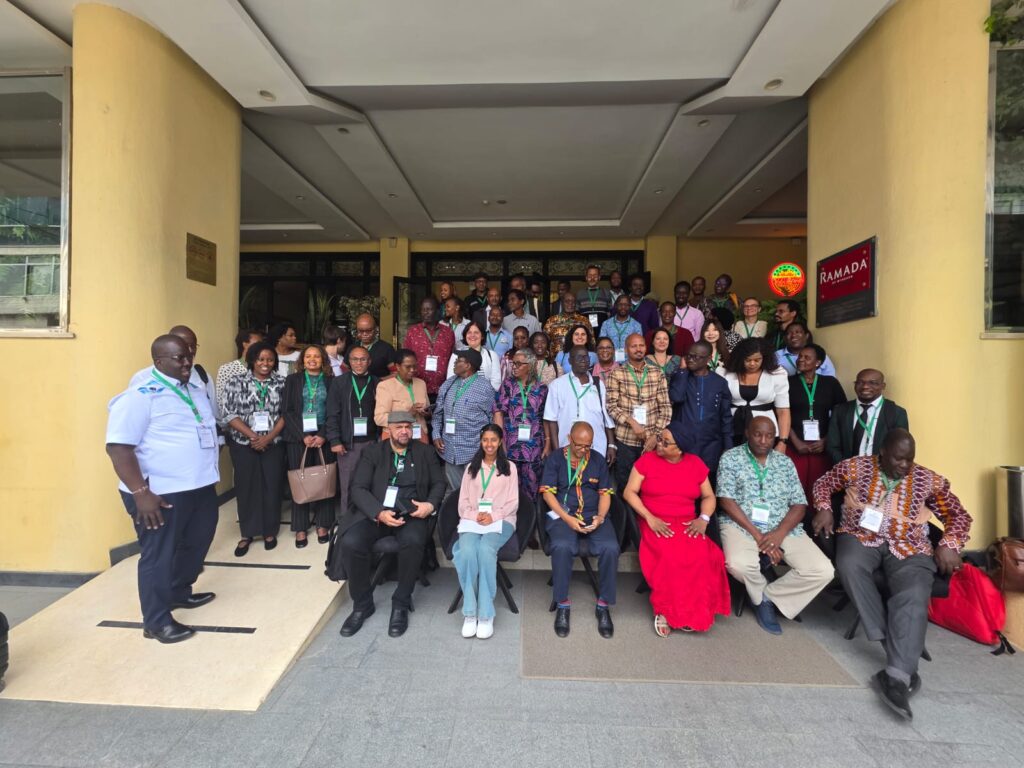
The 16th Annual Conference of the African Network for Internationalization of Education (ANIE) concluded in Addis Ababa, bringing together university leaders, researchers, policymakers and development partners from across Africa and beyond.
Held from 14 to 16 October 2026 at the Ramada by Wyndham and co-hosted by Obreal Global, ESSA and Addis Ababa Science and Technology University (AASTU), the conference took place under the theme Building Resilient Knowledge Ecosystems in Africa: Deepening Partnerships, Policy Coherence, and Innovations.
The central message to emerge was that resilience should be measured by what partnerships leave behind: African-led capabilities, evidence and relationships that endure beyond the life of any project or grant.
Key outcomes and messages
Partnerships should be judged by what endures, not by volume. Delegates argued that capability, ownership and continuity matter more than the number of agreements signed or visits made. Universities were encouraged to review their partnerships by asking who decides, who participates, what becomes possible, who benefits and what remains.
Africa must set the research agenda. Africa produces about 2% of global research and about 3% of education research, much of it framed through external theory. Delegates called for African institutions to lead, not merely participate, and for national research agendas to be co-owned with government.
Resilience starts at the foundations. With 86% of children in sub-Saharan Africa unable to read with understanding by age 10, speakers stressed the need for African evidence to inform solutions.
Internationalisation must reach the majority. Fewer than 1% of African students are internationally mobile. Participants highlighted approaches such as Collaborative Online International Learning (COIL), which brings international learning to all students at home, and which one South African university has scaled to around 200 projects reaching more than 8,000 students.
Policy must be put into practice. Frameworks such as the Continental Education Strategy for Africa (CESA) and the SADC Protocol exist, but implementation remains uneven. Delegates called for faster progress on the recognition of qualifications, which regional mobility and the African Continental Free Trade Area (AfCFTA) depend on.
Intra-African collaboration must be equitable. Regional networks are growing, but delegates noted that collaboration among African institutions is not automatically fair, and called for inequalities within Africa to be named and addressed.
Investing in the next generation of researchers
A workshop on the New Network of Early Career Researchers in Education (NECREDI), co-hosted by ANIE, HERI Africa and the Education Sub-Saharan Africa (ESSA) initiative, set out a pathway to develop, fund, connect, communicate and use the work of early-career researchers. Participants heard that the DigiGrad programme, led by ANIE with OBREAL support and funded by the European Union, has trained 120 supervisors and 120 postgraduate students and launched a network of young African researchers. Speakers also warned that more than 20,000 researchers leave Africa every year, and called for protected research time, mentorship, and promotion systems that reward impact and local publication.
Concrete steps
ANIE and the University of Johannesburg’s Ali Mazrui Centre [signed a Framework Agreement. Confirm term and signatories].
ANIE is a partner in AfriExchange, an Erasmus+ initiative running from 2027 to 2030.
What university leaders are being asked to do
The conference closed with five calls to action: measure partnerships by capability rather than count; invest in people as infrastructure; co-create with government from the start; internationalise at home and start with existing resources; and build intra-African, plural-knowledge networks that include African languages.